


MS
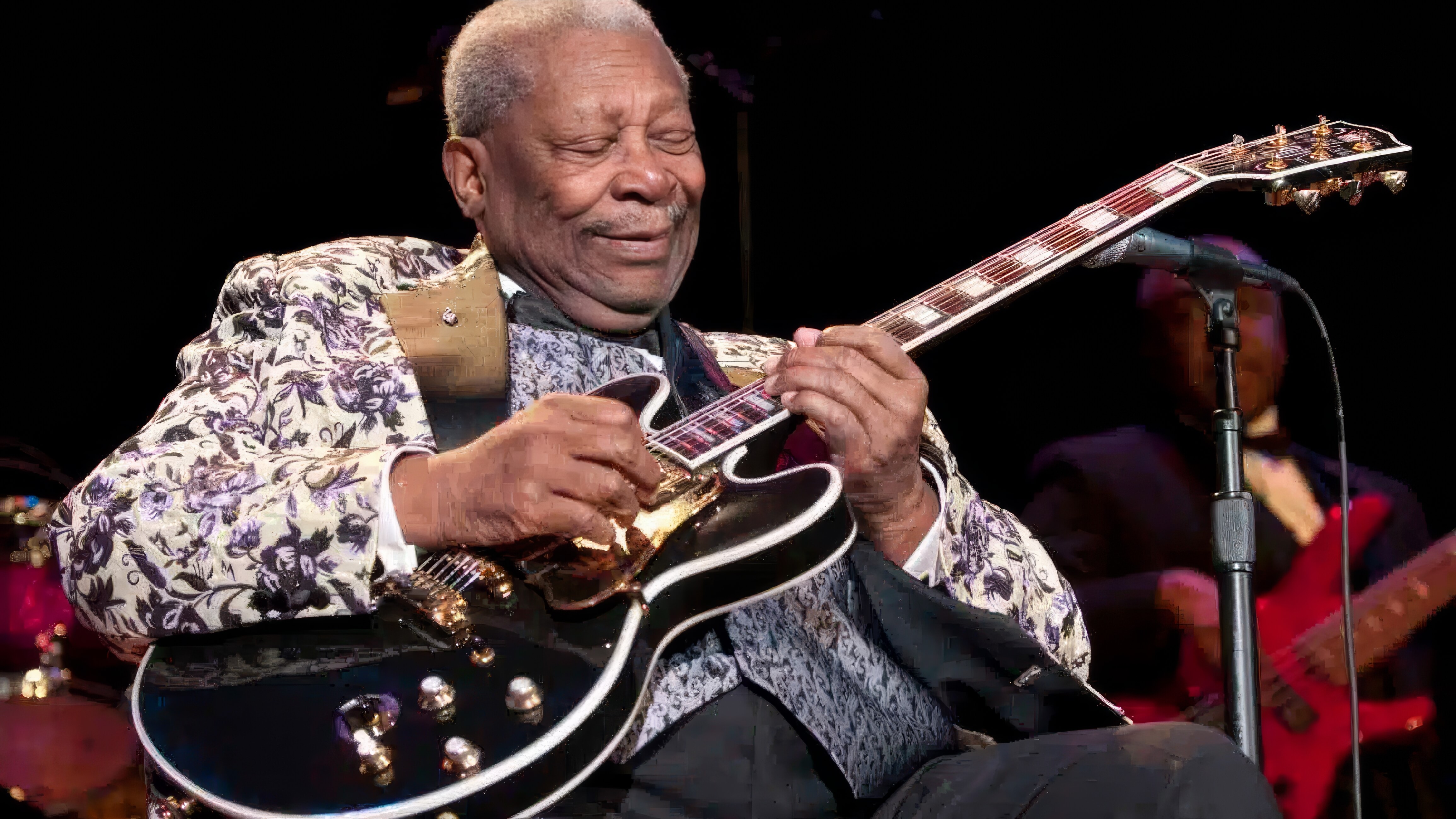
BB King built one of the most recognizable guitar voices in history, and most players think they know his secret. They assume it was the blues scale, the minor pentatonic, the raw grit. But the real magic in his playing came from somewhere sweeter. BB King leaned heavily on the major pentatonic and Mixolydian sound. That choice is what gave his phrasing its warmth, its brightness, and its uncanny ability to lock into changes without moving a finger. Matt Schofield understood this deeply. In his TrueFire work, he zeroes in on exactly how BB extracted so much from so little: one position on the neck, a handful of notes, and a clear-eyed understanding of how those notes interact with every chord in a blues. If you want to play over changes with that kind of authority, this is the conversation to have. You can get the full picture from the complete BB King style breakdown.
Why BB King Didn’t Just Play the Blues Scale
Here’s the misconception that holds a lot of players back. The blues scale is a useful tool. However, it only tells part of the story with BB King. When you listen closely to his slow blues recordings, you hear brightness and sweetness that the minor pentatonic simply cannot produce on its own.
The reason is the major third and the major second. BB King reached for those notes constantly. They sit right inside the major pentatonic, and they create a completely different emotional texture. Instead of tension, you get resolution. Instead of grit, you get melody.
Schofield makes this point clearly: BB King was not ignoring the blues scale. He was choosing, deliberately and repeatedly, to play the sweeter notes. That choice is an artistic decision, not a default. Most players default to minor. BB defaulted to major.
The BB Box: One Position, Maximum Expression
The term “BB box” gets used a lot, but it’s worth being precise about what it actually means. It describes a compact pentatonic shape that sits high on the neck, clustered around the root. In the key of G, that cluster lives up around the eighth-to-tenth-fret region, with the G root readily available on the B string at the eighth fret.
From that home position, BB King had access to a tight cluster of notes rooted in the major pentatonic, with easy reach to the flat-seven and the blue note that gives the box its bluesy, Mixolydian-tinged color. The shape is compact. You don’t need to stretch across the neck. In fact, the constraint is the point.
Schofield emphasizes that economy was central to BB’s approach. Because the position is small, every note has to earn its place. You can’t hide behind a fast run. Instead, you express through touch, through vibrato, through the exact timing of a bend. That discipline is what made BB King sound like BB King.


This video is unavailable.
et tabs and backing tracks for this lesson and performance at TrueFire!Start →
How the Major Pentatonic Moves Over the IV Chord
Here is where things get genuinely interesting. A slow blues or shuffle spends a lot of time on the IV chord. Many players feel the urge to shift position or reach for a different scale when the IV arrives. BB King did neither of those things.
The major pentatonic in the BB box contains notes that naturally outline the IV chord without any repositioning. In G, the major pentatonic gives you G, A, B, D, and E. When the IV chord, C major, arrives, those notes don’t clash. Instead, they beautifully outline the chord’s character. Specifically, the D becomes the fifth of C, the E becomes the major third, and the A becomes the sixth.
Schofield walks through this relationship carefully. He shows how staying put on the neck is not laziness. On the contrary, it’s sophistication. You are trusting the notes to do their work as the harmony shifts underneath you. That is a skill, and BB King had it at the highest level.
Mixolydian Flavor and the Flat Seven
The Mixolydian scale adds one note to the major pentatonic picture: the flat seven. In the key of G, that’s the F natural. This note is central to the blues because the I chord is a dominant seventh, and the F natural is its flat seventh. Over the IV chord, C, that same F sits as the fourth, and over the V chord, it functions differently again. The point is that this one added note gives you the dominant, bluesy color that plain major pentatonic lacks.
BB King used the flat seven with care. He didn’t lean on it constantly. However, when he did reach for it, it deepened the blues character of a phrase without pulling the sound away from the major pentatonic sweetness he preferred. It’s a seasoning, not a foundation.
Schofield demonstrates how to incorporate this note into BB box phrases without losing the melodic clarity that defined BB King’s playing. The key is treating the flat seven as a color you add occasionally. Think of it as a passing tone that connects brighter notes. When you do this right, the Mixolydian element sounds inevitable rather than calculated.
This video is unavailable.
et tabs and backing tracks for this lesson and performance at TrueFire!Start →
A Practical Exercise for Your Next Slow Blues
Put on a slow blues or shuffle backing track in G. Plant yourself in the BB box at the eighth fret of the B string. Then do something that might feel uncomfortable at first: limit yourself to four or five notes for an entire chorus.
Focus specifically on how the major third, the B, changes meaning when the IV chord arrives. On the I chord, the B is the major third of G. On the IV chord, C, that same B becomes the major seventh. The note itself doesn’t move. Only the harmony moves underneath it. As a result, the emotional quality of the note shifts entirely.
This is the core lesson that Schofield draws from BB King’s approach. The notes are not the whole story. The harmony gives each note its meaning. Therefore, learning to hear those shifts while staying in one place is the real practice. For more on how these melodic ideas connect to the broader BB King style, revisit the full artist breakdown.
Meanwhile, if you want to hear how call-and-response phrasing fits into the shuffle context, check out how Josh Smith structures a BB-style shuffle solo. And if you’re curious about how Robben Ford handles the tonal side of this approach, his take on economy and soul on slow blues is worth your time.
Bringing the BB King Major Pentatonic Sound Into Your Playing
The major takeaway here is straightforward. BB King’s sophistication was not about knowing more scales. It was about understanding how a small set of major pentatonic and Mixolydian notes function over moving harmony.
Schofield’s approach gives you a clear entry point. Start with the BB box. Learn to hear the IV chord coming. Trust the notes to stay in place. Then focus on phrasing, timing, vibrato, and dynamics, because those are the variables that actually shape the music. That is how B.B. King built one of the most emotionally direct guitar voices ever recorded. That is also how you start to internalize what made it work.
Dig deeper with Matt Schofield’s full course library on TrueFire!Start →
About the Education Team
Four music-industry veterans with decades of combined experience in music education, curation, and production at TrueFire and ArtistWorks. The TrueFire Studios Education Team plans and edits this content and works with our master-musician faculty to keep it accurate and genuinely useful.
Featured Contributor
MS
Matt Schofield is a British Blues Hall of Fame inductee widely regarded as one of the finest blues guitarists of his generation. Guitar & Bass ranked him among the top ten British blues guitarists of all time, alongside Eric Clapton and Peter Green. His trio work fuses blues, jazz, and soul into a fluid, vocal-like lead voice.