


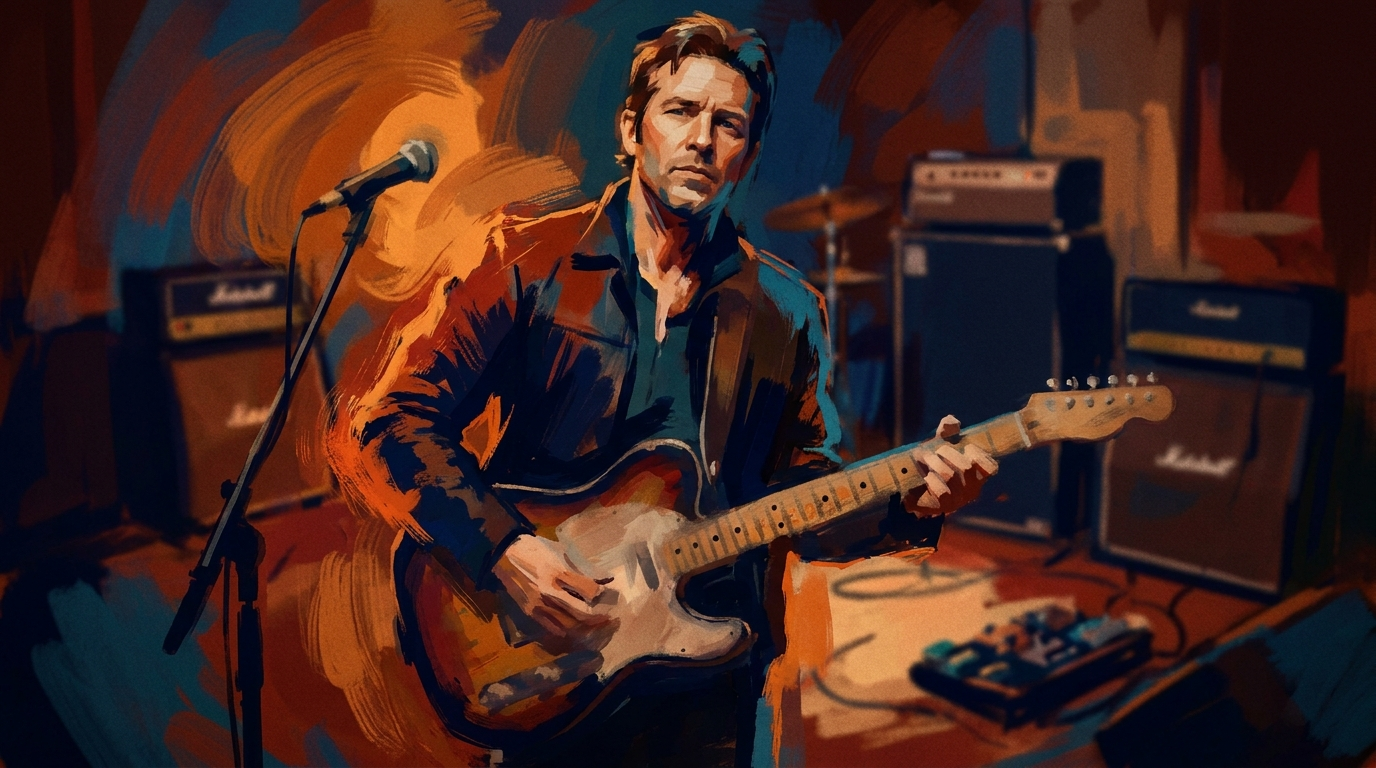
Country shuffle solos are one of the most satisfying things you can play in a honky tonk setting. They are also one of the easiest ways to expose yourself if your feel is off. The shuffle is a feel-first environment. Strong note choices will not save you if your lines sound stiff or out of place against a swinging rhythm section. The goal of this article is to help you understand what the shuffle is actually asking of you before you play a single note. You will learn how to identify the pocket, how to match your lines to the rhythm section underneath you. Why thinking like a fiddle player will change the way you construct phrases. For a broader view of honky tonk soloing, start with the complete working guitarist’s guide to honky tonk lead.
Country Shuffle Solos Start With the Rhythm Section, Not the Notes
Before you think about what to play, think about what is happening below you. Matthew Lee, a working country guitarist and TrueFire educator, puts it plainly and directly:
“A shuffle has a little more feel to it, in my opinion, so always pay attention to what the drums and bass are doing. A shuffle can be played as a two-four shuffle, where the bass player is playing fewer notes, or you may have a walking bass line underneath it. Those create two different kinds of feels. The drummer may be riding the cymbal or playing a hi-hat pattern that gives you a nice, big, deep pocket. As guitar players, we need to listen to that pocket and understand where our part sits inside it.”, Matthew Lee
That last sentence is the key. Your part sits inside the pocket, not on top of it. A two-four bass line creates a sparse, open feel. A walking bass line fills more space and drives harder. Because each creates a noticeably different groove, your job is to identify which one is happening and adjust accordingly. A sparse bass line gives you room to breathe. A walking bass line asks you to be more selective about density, because the bottom end is already full.


This video is unavailable.
Get tabs and backing tracks for this video lesson on TrueFire!Start →
Why Stiff Lines Fight the Shuffle
The shuffle lives in the back half of the beat. It leans back. It breathes. So when a guitarist plays lines that are rhythmically even and tightly subdivided, those lines cut against the groove rather than riding it. The feel that makes country shuffle solos work is lazy in the best possible way. Let your phrases lean back. Give notes a moment to speak before you move on.
This is a different instinct than what you use over a train beat. If you have been working on train beat soloing techniques, you already know the basic toolkit: double stops, open-string notes, and single-note lines. However, applying those same tools to a shuffle requires a conscious shift in how they breathe and swing. The notes may overlap, but the attitude is entirely different.
Think Like a Fiddle Player, Not a Lead Guitarist
This reframe is one of the most useful things you can carry into a shuffle situation. Matthew Lee explains the connection directly:
“Some of the techniques we use in a shuffle are double stops, open-string notes, and single-note lines, but they have a different feel than they do over a train beat. I like borrowing ideas from what a pedal steel might do, or thinking about what a fiddle would play. If you have twin fiddles, that’s where a lot of the double-stop idea comes from. You’re really using all of the different country guitar techniques that are available, but you have to keep that rhythm element in there. Listen to whether the bass player is walking or not, and let the lines swing a little. That swung feel is one of the things that makes shuffles so much fun to play.”, Matthew Lee
Twin-fiddle harmony is the direct ancestor of the double-stop vocabulary in country guitar. When you hear those intervals in a shuffle context, you are hearing something that was originally played by two instruments in harmony. Understanding that lineage changes how you construct phrases. Instead of thinking horizontally along a scale, think in terms of voices moving together. In addition, borrowing from pedal steel vocabulary gives your lines that sliding, vocal quality that shuffles naturally call for.
Knowing the Form Is as Important as Knowing the Licks
Many guitarists focus almost entirely on technique and ignore song form. In a shuffle situation, that is a real disadvantage. Matthew Lee raises a convention that working players encounter constantly:
“As guitar players, our job is not only to comp the chords, but also to understand the form. One thing you’ll encounter a lot in country shuffles is borrowing the back half of the chorus to create the intro. If somebody calls a shuffle I don’t know, I’ll ask what the chords are and usually ask them to sing me a little bit of the melody. Then I can often use the back half of the chorus as the intro, because that’s something you encounter a lot, especially in those Ray Price-style shuffles.”, Matthew Lee
This is a professional skill that separates a competent guitarist from a reliable one. When someone calls a song you do not know, asking for the melody and the chord changes gets you enough information to navigate. Borrowing the back half of the chorus for an intro is a well-worn convention in classic country shuffles. If you know to listen for it and apply it, you can sound prepared even on unfamiliar material.
This video is unavailable.
Get tabs and backing tracks for this video lesson on TrueFire!Start →
Adjusting Your Density to Match the Groove
One practical application of everything above is managing how many notes you play. In a sparse two-four pocket, you have space. Use it. Long tones, bent notes, and well-placed double stops will sit beautifully. In contrast, over a walking bass line, the harmony and rhythm are already very active. Therefore, your lines need to be more deliberate. Fewer notes, chosen carefully, will sit better than a run that clutters the arrangement.
This kind of listening is also what connects country shuffle solos to the broader vocabulary of styles like swampy rock grooves or Western swing chord changes. Each context asks you to listen differently and respond to what the rhythm section offers. The skill transfers. The specific response changes every time.
How to Practice Country Shuffle Solos With Intention
Start with a slow, swinging backing track that features a clear two-four bass groove. Focus entirely on feel. Play fewer notes than you think you need. After a few passes, switch to a backing track with a walking bass line and notice how your phrasing needs to tighten up. Next, practice the fiddle-to-guitar mental shift: choose double stops over single notes whenever possible, and think about them as two voices moving in harmony rather than as a technique. Finally, practice identifying song form quickly. Listen to a classic country shuffle, find the chorus. Figure out how the back half could serve as an intro.
The Shuffle Rewards Listening Over Flash
Country shuffle solos are not about impressing anyone. They are about serving the song and fitting inside a groove that is already doing something beautiful on its own. As Matthew Lee makes clear throughout his approach, the rhythm section tells you what you need to know. Your job is to listen, identify the pocket, and slot your lines inside it with feel and intention. For a complete framework that connects this style to every other honky tonk soloing context, return to the honky tonk lead guitar survival guide. And if you want to explore how these same tools evolve into a more contemporary direction, check out the piece on modern country soloing techniques.
Dig deeper with Matthew Lee in his TrueFire library!Start →
About the Education Team
Four music-industry veterans with decades of combined experience in music education, curation, and production at TrueFire and ArtistWorks. The TrueFire Studios Education Team plans and edits this content and works with our master-musician faculty to keep it accurate and genuinely useful.
Featured Contributor
Lee has been in the Nashville music scene for over a decade. He’s played thousands (yes, thousands) of gigs at clubs across Lower Broadway and has developed his own style and approach to country guitar. Matthew has been featured on many recording sessions with several popular artists.