


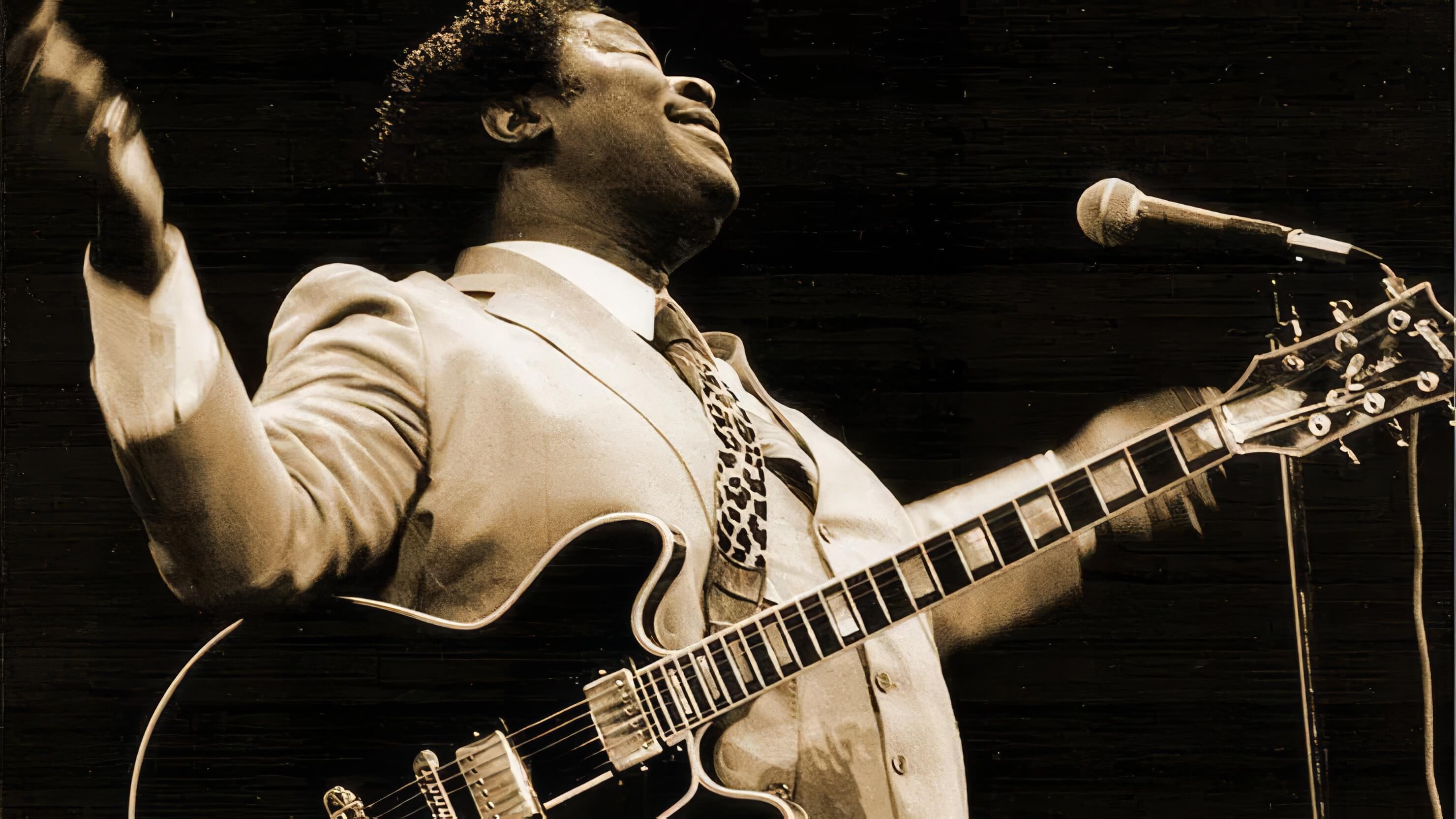
How Josh Smith builds a BB King-style shuffle solo is, at its core, a lesson in conversation. Every phrase Smith plays asks a question. Then he stops. Then he answers it. That structure, borrowed directly from BB King, practically writes the solo for you once you commit to it. If you’ve been studying BB King’s core style and techniques through the TrueFire artist breakdowns, you already know BB was the master of this approach. This article goes deeper into Smith’s specific take: the call and response framework he uses, the techniques he pulls directly from BB’s vocabulary. The mindset that keeps every chorus feeling like a story worth hearing.
How Josh Smith Builds His Shuffle Foundation on Conversation
The first thing Smith emphasizes is that BB King’s shuffle playing was pure conversation. BB stated an idea. Then he breathed. Then he answered himself. That pattern is the skeleton of the whole approach.
So how josh smith builds from that skeleton is simple. He commits to the structure before he plays a single note. He decides to leave space. That decision shapes everything that follows.
Most players fill every measure. Smith does the opposite. He treats silence as part of the phrase, not a mistake. As a result, every note he does play carries more weight.


This video is unavailable.
et tabs and backing tracks for this lesson and performance at TrueFire!Start →
The Influences Behind BB’s Vocabulary
BB King didn’t invent this language from nothing. Smith points out that BB was listening closely to Lonnie Johnson, T-Bone Walker, Django Reinhardt, and Charlie Christian. These were players who could really blow. Because of that, a vocabulary of chromatic lines and sophisticated chops was always sitting just under BB’s surface.
Understanding this matters when you study how Josh Smith builds his shuffle lines. Smith occasionally lets a chromatic move surface. He’ll hint at a jazz-flavored pickup. However, he never lets those elements overpower the blues feeling. They add texture without changing the conversation.
This context is also why BB’s playing always sounded bigger than a single-position pentatonic idea. He had a deep well to draw from. For example, even a small chromatic approach note can nod to Charlie Christian without losing the BB feel.
Specific Moves Smith Pulls Directly from BB
How Josh Smith builds his BB-style phrases comes down to a handful of specific moves. Smith names them clearly. First, there are the high-note stabs. BB would reach up to a high bend or a stinging note above the phrase. Smith uses those to punctuate a call before leaving space.
Next, Smith highlights pickup notes. BB almost never started a phrase right on the beat. Instead, he would sneak a note in just before the downbeat. That small move creates forward momentum. It makes the phrase feel inevitable.
The major third figure on the 2 and 5 chords is another key element. BB favored that sound specifically at those moments in the progression. Smith isolates it and practices it until it feels automatic. In addition, Smith emphasizes hammering home the root of the 5 chord. That move plants a flag. It tells the listener exactly where you are in the form.
The BB Box Truth Smith Wants You to Know
Here is one of the most freeing things Smith says about this style. You can play ten full choruses without ever leaving the third-position pentatonic box BB favored. The storytelling never runs out of room there. Therefore, position-jumping is not the goal.
This is specifically where how Josh Smith builds solos differs from what most intermediate players expect. They assume they need to cover the neck. Smith says no. He says the box has infinite depth because the conversation never exhausts itself. The limiting factor is never the position. Instead, it is the willingness to commit to call and response every single chorus.
That constraint is actually freeing. Because you know where your hands are, you can focus entirely on what you are saying. The technique becomes transparent. The story becomes the point.
This video is unavailable.
et tabs and backing tracks for this lesson and performance at TrueFire!Start →
Mindset: Follow the Narration, Let BB Surface Naturally
Smith is direct about the mindset piece. The goal is not to cram licks in. Instead, the goal is to follow the narration you are hearing and feeling. You think about BB just enough that his influence surfaces naturally. Then you get out of the way.
In practice, this means trusting the first phrase that comes to you. Play it. Stop. Listen to what it asked. Then answer it. That loop is how Josh Smith builds momentum across an entire solo without forcing anything.
This is also why studying BB works so well as a framework for beginners and experienced players alike. The vocabulary is accessible. However, the depth is unlimited. If you want to explore how economy and restraint shape a slow blues differently, Robben Ford’s approach to BB’s tone and soul is the natural next step. And if you’re curious how a signature motif can anchor an entire solo, Seth Rosenbloom’s take on BB’s minor third bends gives you a specific and repeatable entry point.
Try This Before Your Next Shuffle
Here is the practical challenge Smith offers. Play a shuffle. Start your solo with one simple statement. Then stop completely. Force yourself to leave space before you answer. Let the conversation build from there.
That single constraint will change how you improvise. Because you are building call and response into the structure from note one, the solo shapes itself. You stop thinking about what lick to play next. Instead, you start thinking about what your last phrase said and what it needs to hear back.
This is ultimately how Josh Smith builds a BB King-style solo that feels honest. He follows the structure BB laid out. He uses specific moves from BB’s vocabulary. He stays in the box. Finally, he trusts the conversation to carry him through.
For a broader look at everything BB brought to the guitar, return to the full artist breakdown at the heart of this series. There you’ll find four other guitarists unpacking their own windows into BB’s genius, each one giving you a new way in.
Dig deeper with Josh Smith’s full course library on TrueFire!Start →
About the Education Team
Four music-industry veterans with decades of combined experience in music education, curation, and production at TrueFire and ArtistWorks. The TrueFire Studios Education Team plans and edits this content and works with our master-musician faculty to keep it accurate and genuinely useful.
Featured Contributor
Josh Smith is a blues-rock guitar virtuoso, singer-songwriter, and one of the genre’s most sought-after producers. Guitar World has named him among the best living blues guitarists, and his production work spans Joe Bonamassa, Eric Gales, and Mike Zito. A fixture at LA’s Baked Potato, he fuses blues, jazz, and rock with rare technical command.