



We’ve all been there. You’ve spent months perfecting your minor pentatonic boxes, and you can shred through a blues shuffle with your eyes closed. But then…it happens. The progression shifts to a major II-V-I or a bridge with a few “outside” chords, and suddenly, your go-to licks sound like they’re from a different planet.
To truly unlock your skills, you have to move beyond just playing in a key and start soloing over chord changes guitar players actually use in real-world musical scenarios. It’s the difference between “noodling” and making a statement.
In this guide, we’re going to dig in to the mechanics of melodic lead playing. We’ll break it down step-by-step, moving from basic scale patterns to sophisticated concepts like target tones and vertical vs. horizontal soloing. Whether you’re looking to conquer jazz standards, sophisticated blues, or melodic rock, the journey to mastery starts here in the woodshed.
Table of Contents
Connecting Scales and Chords: The Foundation
When you are connecting scales and chords, you are learning the DNA of the music. For every chord you play, there is a corresponding “home base” scale. For example, over a C Major 7 chord, you might envision a C Major scale or a C Lydian mode. If you’re struggling with the basics of how chords are built, it’s worth taking a moment to brush up on your chord theory to ensure your foundation is rock-solid.
By seeing the chord tones inside the scale patterns, you stop guessing and start knowing exactly which notes will sound “sweet” and which will create tension. This is the first step toward a professional sound.
Vertical vs. Horizontal Soloing: Two Paths to the Same Goal
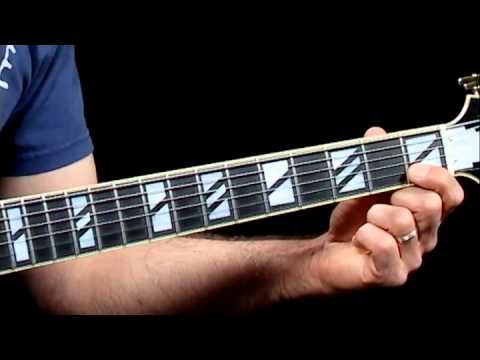
To navigate the fretboard effectively, you need to understand two primary mental frameworks: Vertical vs. Horizontal soloing.
Vertical Soloing: The “Inside” Approach
Vertical soloing (often called “playing the changes”) involves treating each chord as its own island. When the chord changes, your scale or arpeggio changes with it.
- The Pro: You will always sound perfectly in tune with the harmony.
- The Con: It can sound “jumpy” or disconnected if you don’t use smooth transitions.
Horizontal Soloing: The “Linear” Approach
Horizontal soloing focuses on the overall key of the song. You find a scale that works over a group of chords and look for melodic threads that tie them together.
- The Pro: It leads to more “singable,” lyrical melodies.
- The Con: You might miss the unique “flavor” notes of individual chords.
The masters—think Larry Carlton or Pat Metheny—blend these two approaches seamlessly. They use horizontal lines to create flow and vertical arpeggios to highlight the harmonic shifts. To see this in action with one of the greats, check out Jeff McErlain’s Soloing the Changes course, where he demonstrates how to navigate sophisticated changes with legendary taste.
The Power of Target Tones

If there is a “secret sauce” to soloing over chord changes guitar, it is the use of target tones. A target tone is a specific note (usually a chord tone like the 3rd or 7th) that you aim for when a new chord arrives.
Why the 3rd and 7th? Because these are the “guide tones” that define the quality of the chord (major, minor, or dominant). If you land on the 3rd of a C7 (the note E) right as the chord hits, the listener’s ear instantly recognizes the harmony in your lead line. This creates a sense of resolution and authority.
To master this, you need to practice “voice leading.” This is the art of moving from a note in one chord to a note in the next chord by the smallest distance possible (usually a half-step or whole-step). This creates a sophisticated, “fluid” sound that bypasses the “box pattern” trap.
Practical Exercises to Build Your Fluency
Ready to hit the woodshed? Here are three exercises designed to help you unlock your skills immediately.
1. The “Arpeggio Superposition” Drill
Take a simple ii-V-I progression (e.g., Dm7 – G7 – Cmaj7). Instead of playing the D minor pentatonic over everything, play only the arpeggio for each chord.
Goal: Be able to play the 1-3-5-7 of each chord without pausing as the rhythm changes.
2. The “3rd and 7th” Connecter
Play a simple blues progression. On every chord change, make sure the first note you hit is either the 3rd or the 7th of the new chord. This forces you to visualize the Target Tones in real-time. For a deeper dive into this specific technique, Christopher Woitach’s Jazz Textures course is an incredible resource for learning how to blend blues feel with sophisticated note choice. Check out a sample lesson here:

3. The One-String Challenge
Try soloing over a backing track using only one string. This removes your reliance on vertical box shapes and forces you to think horizontally, focusing on the melody and the intervals between the notes.
Using interactive learning tools like TrueFire’s slow-mo and looping features can make these exercises significantly more effective, allowing you to catch every nuance of the transition.
Common Mistakes to Avoid
Even seasoned players fall into these traps when soloing over chord changes guitar. Keep an eye out for these:
- Ignoring the Rhythm: You can play the perfect notes, but if your phrasing is stiff, it won’t swing. Listen to how greats like Jack Ruch (a frequent TrueFire collaborator) use space and syncopation to make their “outside” lines breathe.
- Overplaying: Just because you can play through the changes doesn’t mean you should play all of them. Sometimes, holding a single chord tone over two different chords creates a beautiful tension.
- Relying Solely on Your Eyes: Don’t just look at the shapes on the fretboard. Use your ears. If a note sounds good, it is good, regardless of whether it fits a “perfect” theoretical model.
Conclusion: Your Journey to Melodic Mastery
Learning the art of soloing over chord changes is a marathon, not a sprint. It requires a blend of theoretical knowledge, physical dexterity, and, most importantly, musical curiosity. By focusing on connecting scales and chords, experimenting with vertical vs. horizontal soloing, and hitting those target tones, you are setting yourself apart from the sea of guitarists who stay stuck in the pentatonic box.
The fretboard is no longer a mystery once you have the right map. Now, it’s time to take these concepts to the stage. Grab your guitar, fire up a backing track, and start making those changes work for you.
Ready to take the next step?
If you’re serious about mastering these concepts, there’s no better way than learning directly from the pros. Try TrueFire All Access for FREE with a 14-day trial and explore thousands of lessons on lead guitar, music theory, and improvisational mastery.