


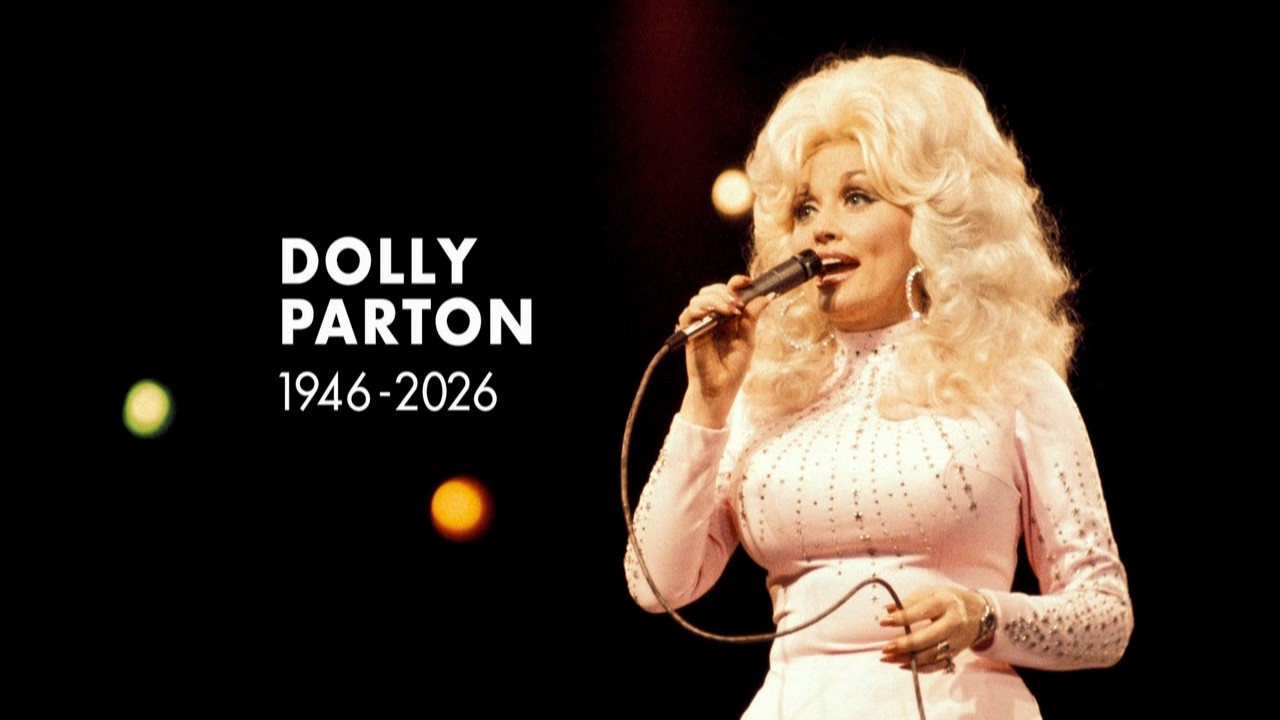
The world lost one of its greatest songwriters today. Here at TrueFire, we lost a hero.
Dolly Parton passed away on Tuesday, August 25, in Nashville. She was 80 years old. Her family shared the news on her social channels, and within minutes it felt like the whole world stopped to say the same thing at once: thank you, Dolly.
We wanted to take a minute to do the same, from a community of guitar players who owe her more than we usually admit.
A songwriter first
Ask most people about Dolly and they’ll mention the hair, the rhinestones, the one-liners, the movies, the theme park, the books she put in the hands of millions of kids. All of that is real, and all of it was on purpose. She built that persona with her own two hands and then spent sixty years proving there was a lot more underneath it.
What was underneath it, more than anything, was a songwriter. Dolly wrote somewhere around 3,000 songs in her lifetime. She wrote on tour buses and in bathtubs and on airplanes. She wrote when she was a five-year-old in a cabin in the Smoky Mountains with no electricity, before she could read or write, and she never stopped. Hundreds of those songs were cut by other artists, from Whitney Houston to Merle Haggard to the White Stripes.
That’s the part of Dolly’s story that should hit home for anyone who picks up a guitar. She didn’t come from money, connections, or a music school. She came from a family of twelve kids, a sharecropper father, and a mother who sang old mountain ballads while she did housework. An uncle bought her a guitar and showed her a few chords. She was on the radio in Knoxville by age ten and on the Opry stage before she was old enough to drive. The whole thing started with a kid, an instrument, and a burning need to get the songs out.
The guitar was always there
Dolly was never a flashy player, and she’d be the first to tell you that. But she was a real one. She played with those famous long nails, which pushed her toward open tunings and simple, sturdy voicings that let the melody and the story do the work. She often wrote on guitar, and you can hear it in the bones of the songs: three and four chord progressions that never get in the way, hooks you can hum after one listen, and lyrics that land like a punch to the chest.
Think about “Jolene.” Strip away the production and it’s a minor-key fingerpicked riff cycling under a melody that’s begging on its knees. It might be the most covered country song of the last fifty years, and one reason is that it’s just so playable. Capo up, grab your minor shapes, and you’re in the room with her.
Or “Coat of Many Colors,” which she has said she wrote on the back of a dry cleaning ticket riding Porter Wagoner’s tour bus. Three chords. A story about a homemade coat and a schoolyard full of kids laughing at it. It’s a masterclass in how much you can say with how little.
Or “I Will Always Love You,” which she wrote as a goodbye to Wagoner when she left his show in 1974. She has told the story that she wrote it and “Jolene” on the same day. Let that one sink in the next time you’re stuck on a chorus.
A classic Dolly Parton guitar lick

What she taught us without ever giving a lesson
Dolly Parton never taught a guitar course. But every player in this community can learn something from how she worked:
Write every day. She described songwriting as being as natural to her as cooking breakfast. Not everything she wrote was great. She wrote it anyway. That’s the practice.
Serve the song. Her playing was never about her playing. It was about the story getting across. Some of the best guitar advice you’ll ever get is buried in her catalog: know when to get out of the way.
Stay curious. Bluegrass, countrypolitan, disco-era pop, gospel, covers of Neil Young and Led Zeppelin, records with Linda Ronstadt and Emmylou Harris, duets with Kenny Rogers and Queen Latifah. She never let a genre wall tell her what she could and couldn’t sing.
Be generous. She built Dollywood in the county she grew up in to create jobs for her neighbors. Her Imagination Library has mailed more than 200 million free books to young children. She gave away songs, credit, money, and time for her entire life, and she did most of it without making a big deal of it.
Play a Dolly song tonight
If you want to honor her the way we think she’d want, don’t just stream the hits. Learn one. Sit down with “Jolene” or “Coat of Many Colors” or “9 to 5” and work it out. Sing it, even if you don’t sing. Play it for somebody.
And then write something of your own. That’s the real tribute. Dolly’s whole life was proof that a kid with a cheap guitar and a notebook can see worlds beyond wherever they started, if they just keep writing.
Rest easy, Dolly. We’ll keep the songs going.