


Sus chords, add9 chords and major 7 chords are the fastest way to make familiar shapes sound richer. Most of them take one finger to change. Some even need fewer fingers than the chord you already know. This guide explains what each type does, why it sounds the way it does, and which five chords to learn first.
Why Plain Chords Can Sound Like a Beginner
Plain major and minor chords are the backbone of almost every song. However, when every chord in a song is a plain shape, the result can sound flat and predictable. Listen closely to a polished acoustic player, and you’ll often hear chords that are slightly different.
Those chords usually change just one note. Sometimes they swap a note out, and sometimes they add one on top. Players often call them “color chords,” because they add color to a familiar sound.
The good news is that you don’t need new skills to play them. In fact, most of the color chords in this series are open-position shapes. If you can play C, D, A and G, you’re already close.
What a Color Chord Changes
A plain major or minor chord is built from three notes: the root, the third and the fifth. The third is the important one, because it decides whether a chord sounds major (bright) or minor (sad).
Color chords work by changing what happens around that third. For example, sus chords replace it. Add9 chords keep it and add an extra note. Major 7 chords keep it and add a note just below the root. As a result, each type has its own clear personality.
How to Read the Chord Shapes in This Series
Each guide in this series spells out its chord string by string. The strings are listed from the thickest (low E) to the thinnest (high E). For each string, you’ll see whether to play it open, which fret to press and which finger to use.
Some guides also show a short shape code, such as x32010 for an open C. Read it from the low E string to the high E string. An “x” means don’t play that string, a “0” means play it open, and a number is the fret to press.
What Are Sus Chords?
“Sus” is short for suspended. In sus chords, the third is swapped for one of its neighbors: the second or the fourth. Without a third, the chord is neither major nor minor. That’s why sus chords sound open, modern and a little unresolved.
There are two kinds, and each one has its own job.
Sus2 Chords
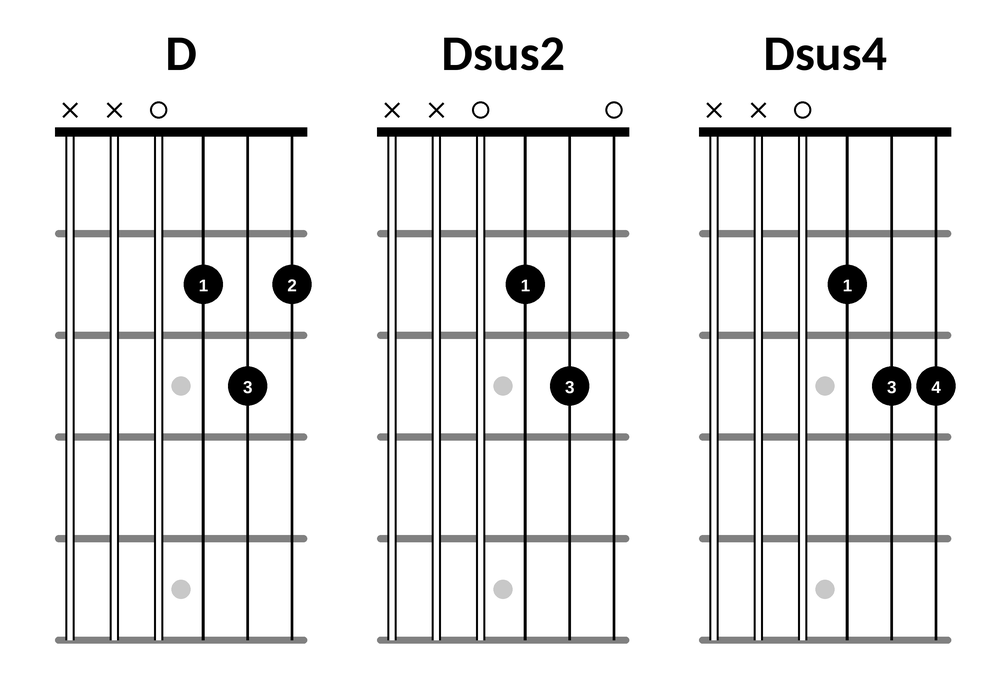
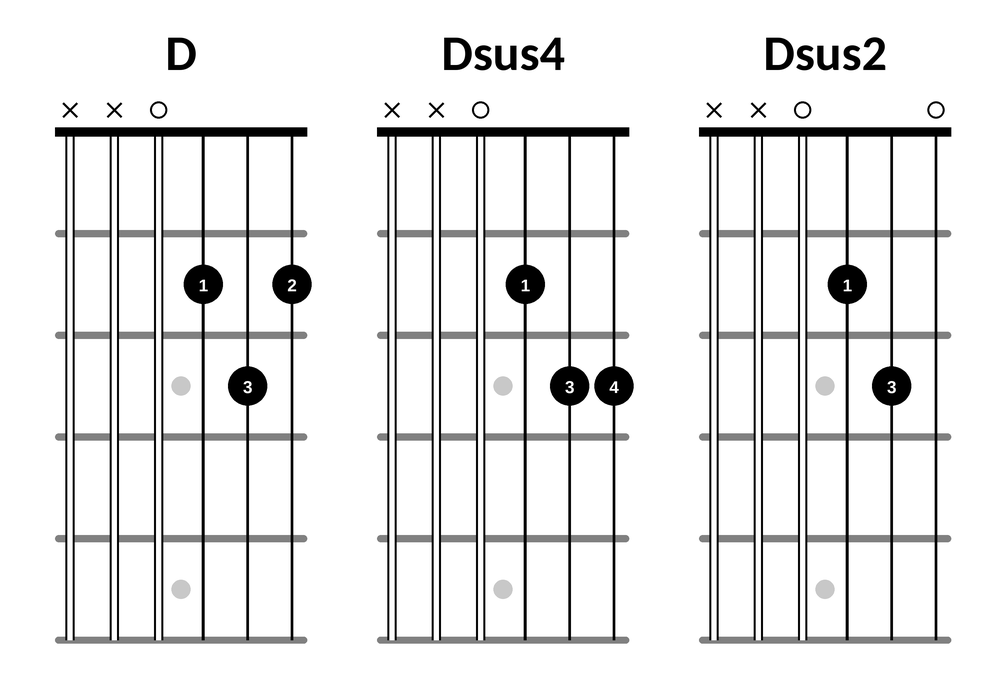
A sus2 chord replaces the third with the second note of the scale. For example, a D chord is built from D, F# and A. Dsus2 swaps the F# for an E, so it’s built from D, E and A.
The result sounds airy and open. It doesn’t pull hard in any direction, so you can stay on a sus2 chord for a whole bar without it sounding unfinished. Many modern pop and worship songs use sus2 chords this way.
Sus4 Chords
A sus4 chord replaces the third with the fourth note of the scale. So Dsus4 swaps the F# for a G, which makes it D, G and A.
The sus4 sound is tenser. The fourth sits just above the third, so your ear expects it to fall back down. That pull is the whole point, and it’s why sus4 chords so often move straight back to the plain chord.
Why Sus Chords Want to Move
The name comes from classical music. There, a note from one chord was “suspended,” or held over, into the next chord before it resolved down to the third. Guitarists use the same idea today, only faster.
The classic example is D to Dsus4 and back to D. You keep the same shape and add or lift one finger. Meanwhile, the strumming hand keeps going, so the chord seems to move even though the song stays on D. For another well-loved example, see our look at the Esus guitar chord.
Add9 Chords: The Same Chord With Extra Shimmer
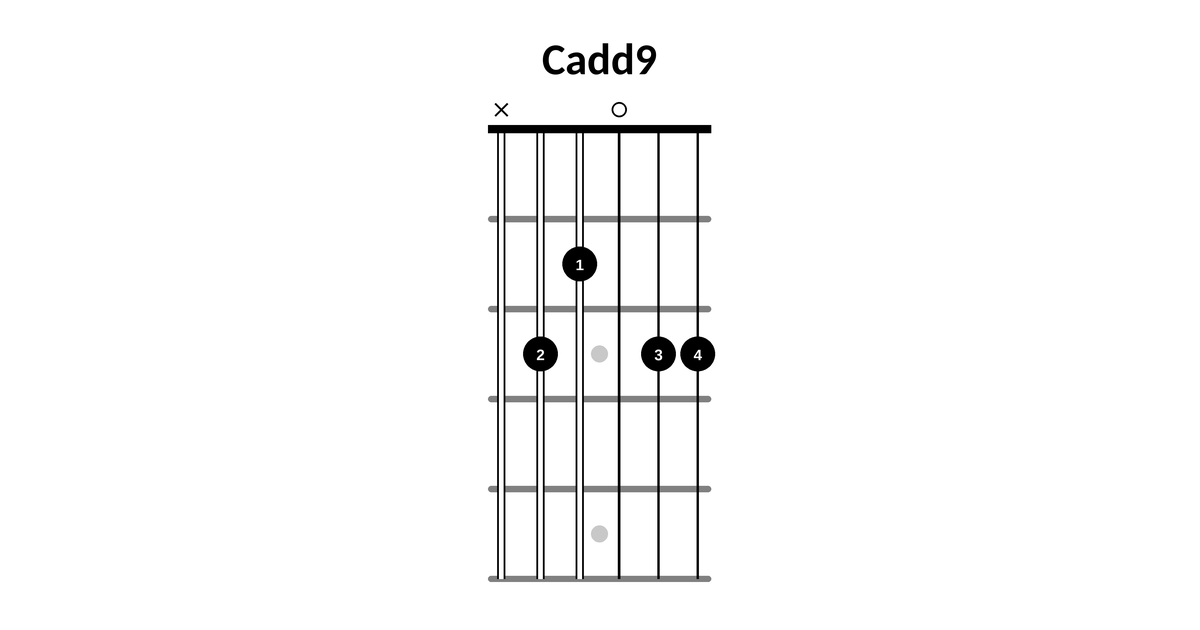
An add9 chord keeps everything in the plain chord and adds one more note: the ninth. The ninth is the same note as the second, counted an octave higher. So Cadd9 is C, E and G, plus D.
Because the third is still there, an add9 chord still sounds major. The extra note simply sits on top and adds sparkle. That makes add9 chords an easy swap in almost any strummed song.
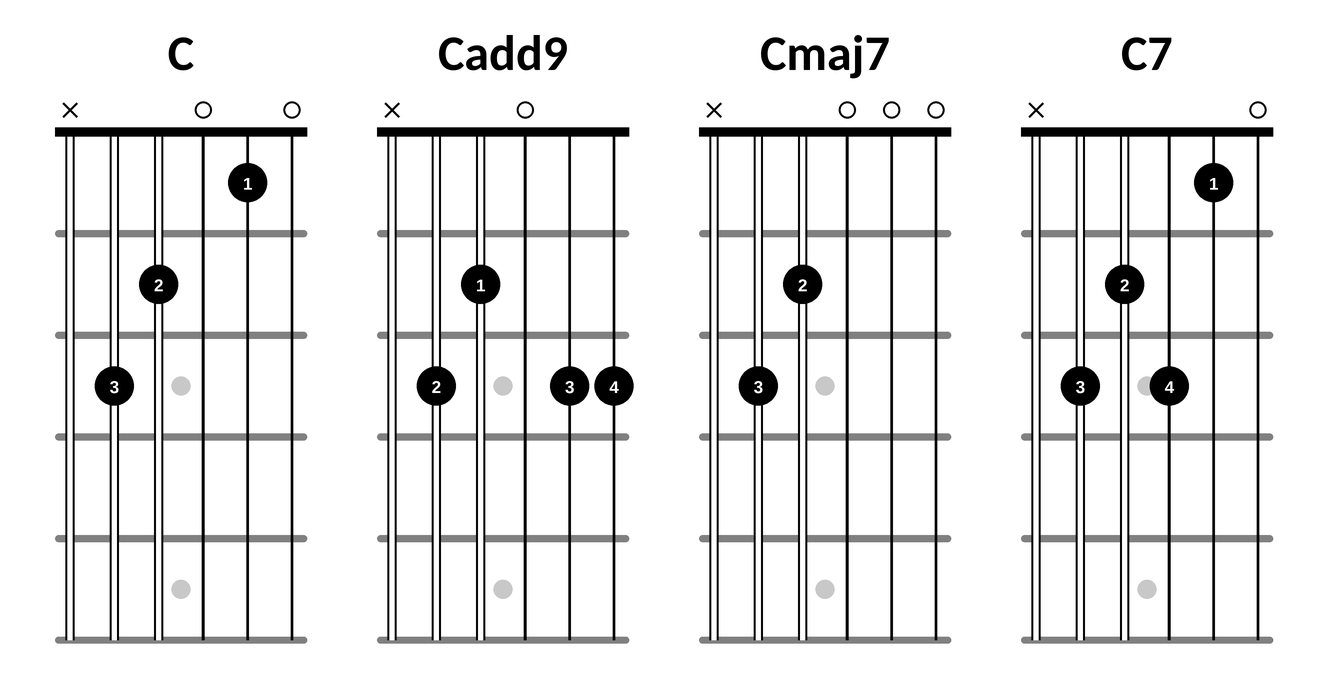
Add9 vs. Sus2: What’s the Difference?
These two chords both contain the second (or ninth), so they’re easy to mix up. The difference is the third. An add9 chord keeps it, while a sus2 chord removes it.
In practice, that changes the mood. Cadd9 sounds bright and full. Csus2, by contrast, sounds hollow and unresolved. Some chord charts use the names loosely, so it’s worth knowing which sound you’re after.
Major 7 Chords: Warm, Dreamy and a Little Jazzy
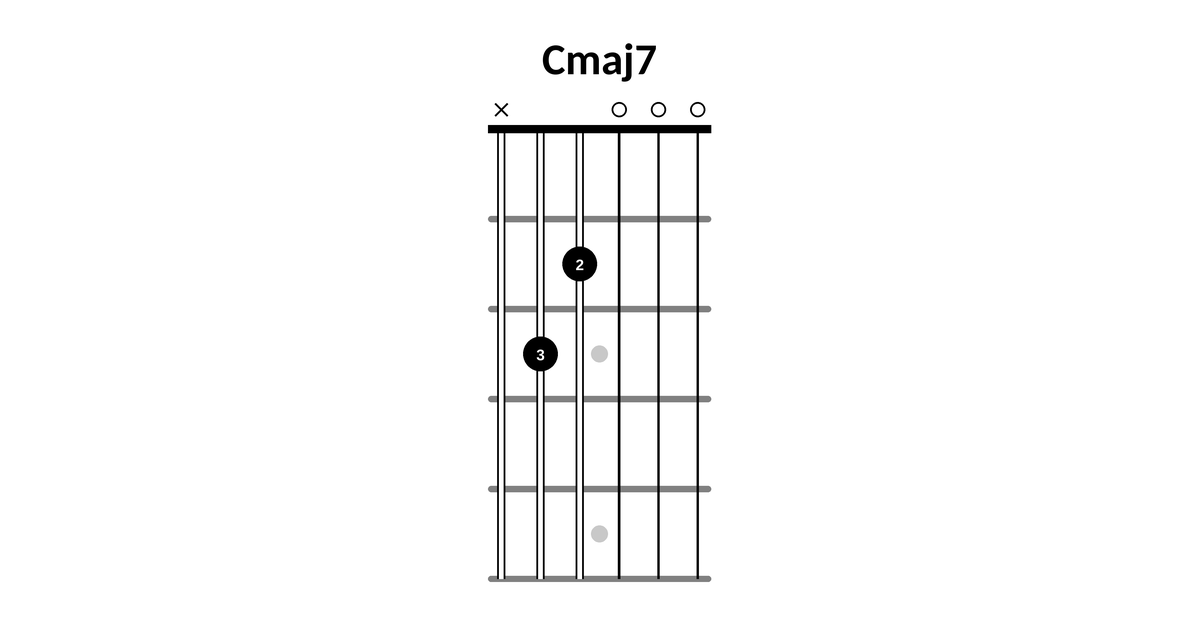
A major 7 chord adds the seventh note of the major scale to a plain major chord. That note sits just a half step below the root. For example, Cmaj7 is C, E and G, plus B.
The sound is soft and warm, with a gentle ache. It shows up everywhere from jazz and bossa nova to soul, soft rock and dreamy indie pop. Unlike a sus4 chord, a major 7 chord is happy to rest. Many songs sit on one for bars at a time.
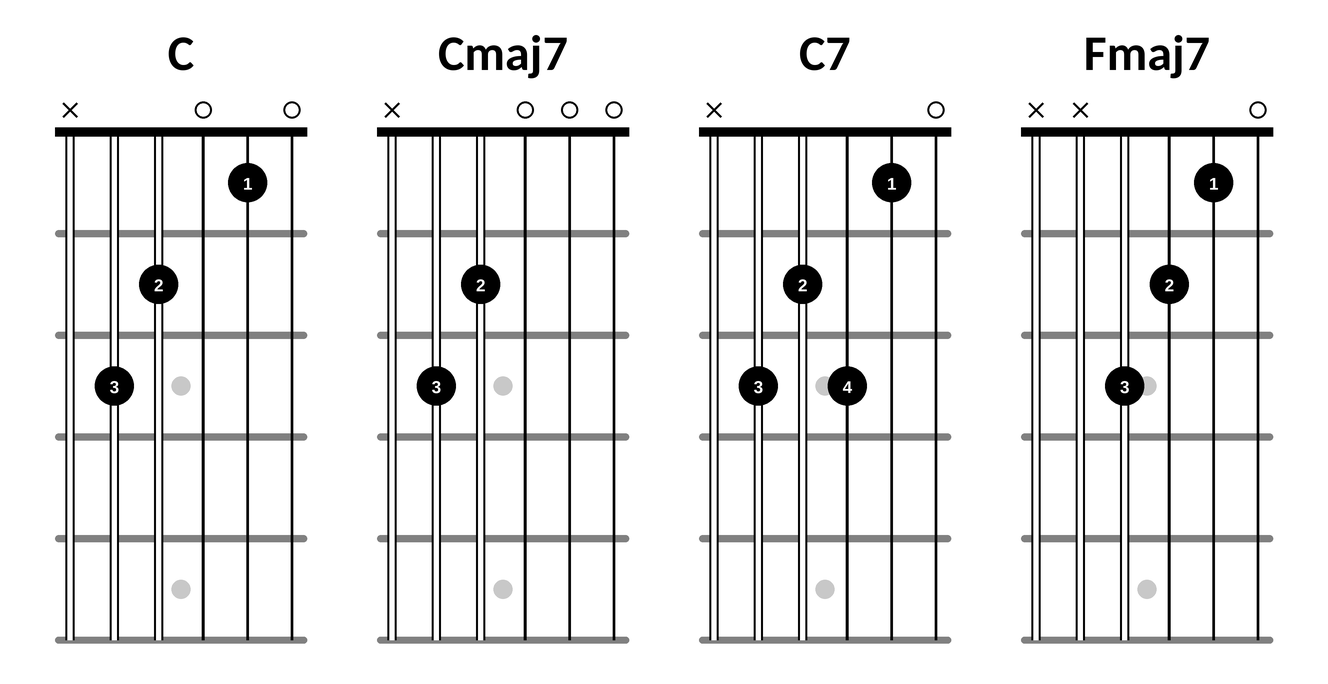
Major 7 vs. Dominant 7
The names are easy to confuse, but the sounds are very different. A plain “7” chord, also called a dominant 7, uses a lower seventh. So C7 is C, E, G and B-flat, instead of B.
That one-fret difference changes everything. C7 sounds bluesy and restless, and it wants to move to the next chord. Cmaj7, on the other hand, sounds calm and settled. When a chart says “maj7,” use the major 7 shape.
Where You’ll Hear Color Chords
Once you know these sounds, you’ll start hearing them everywhere. Each style tends to favor its own colors.
Singer-Songwriter and Acoustic Pop
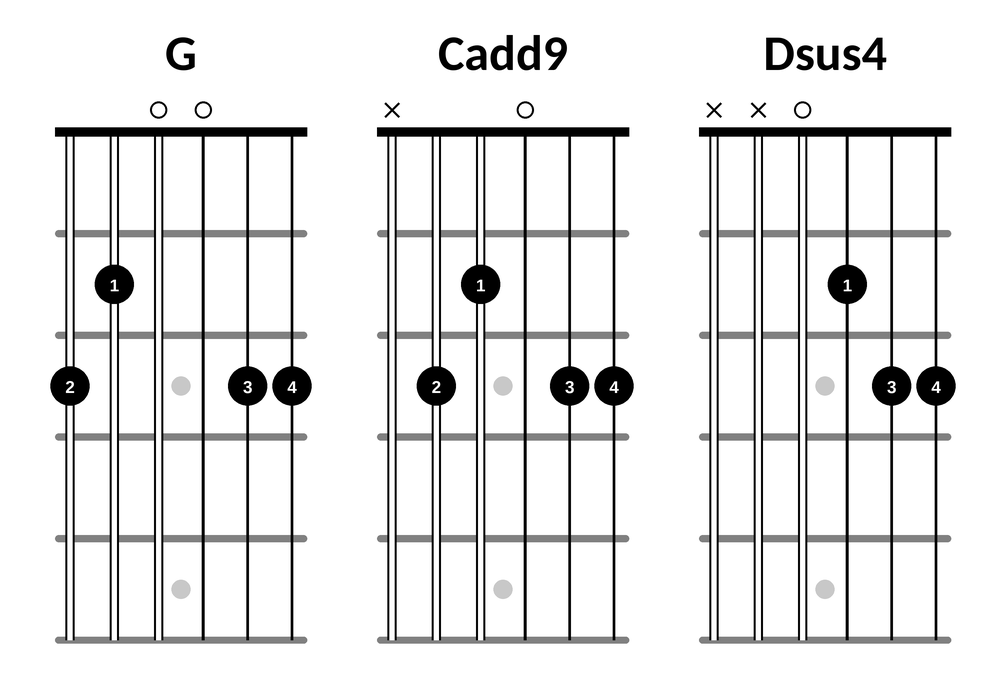
Acoustic players lean on add9 and sus chords because they ring out with open strings. A strummed Cadd9 or Dsus2 fills more space than a plain chord, which helps a single guitar sound bigger behind a voice.
Country and Worship
Country and worship guitarists often move between a chord and its sus4 or sus2 version. That small movement keeps a long strummed section from feeling static. It also leaves room for the vocal, since the chord itself stays the same.
Jazz, Soul and R&B
These styles favor major 7 chords and other extended sounds. A Cmaj7 or Fmaj7 gives a ballad its warm, late-night feel. In jazz, major 7 chords are part of the everyday vocabulary rather than a special effect.
Hear the Difference: One Progression, Two Ways
The fastest way to understand color chords is to play the same progression twice. First play it with plain chords, then with color chords, and listen to how the mood changes.
The Plain Version
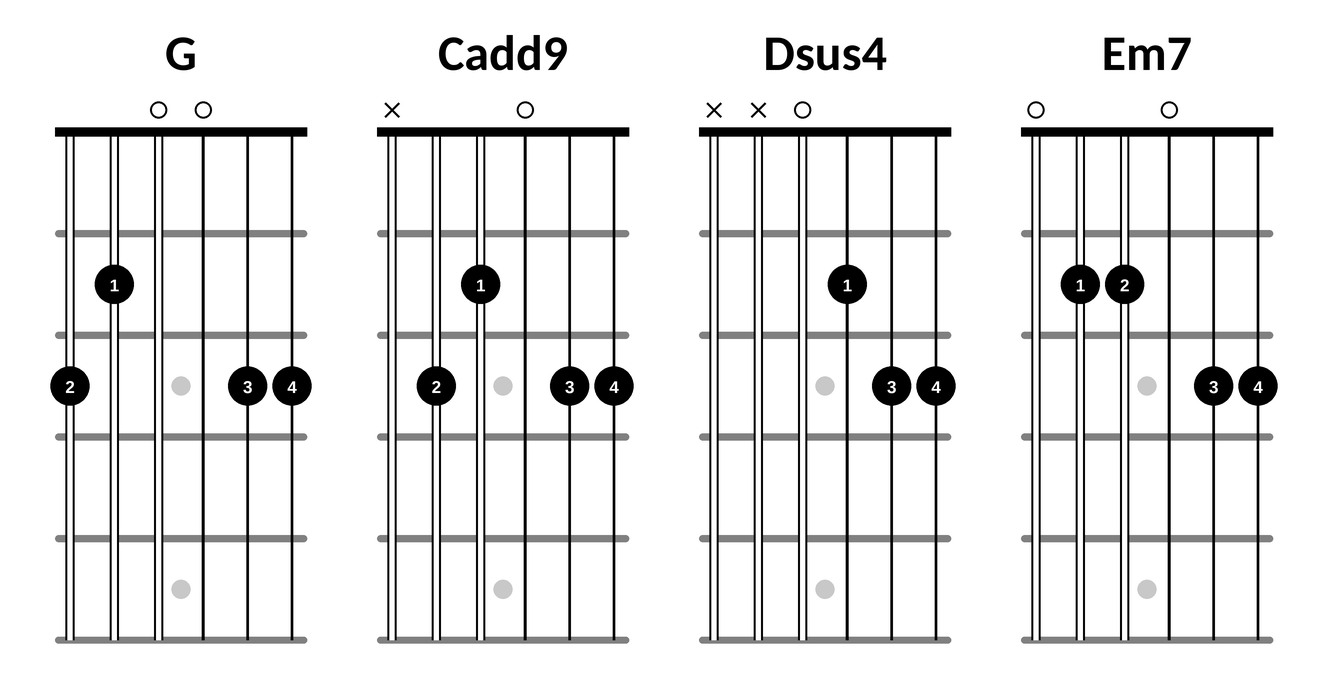
Strum G, C, D and Em, four beats each. It sounds fine, and it’s the kind of progression thousands of songs use. Still, each change is a full jump to a new shape.
The Color Version
Now play G, Cadd9, Dsus4 and Em7. In this version, your ring finger and pinky stay on the third fret of the two thinnest strings the whole time. Only your other fingers move. The progression sounds fuller, and the changes feel smoother. Our guides to the Cadd9 chord and the Dsus4 chord show each shape string by string.
Five Color Chords to Learn First
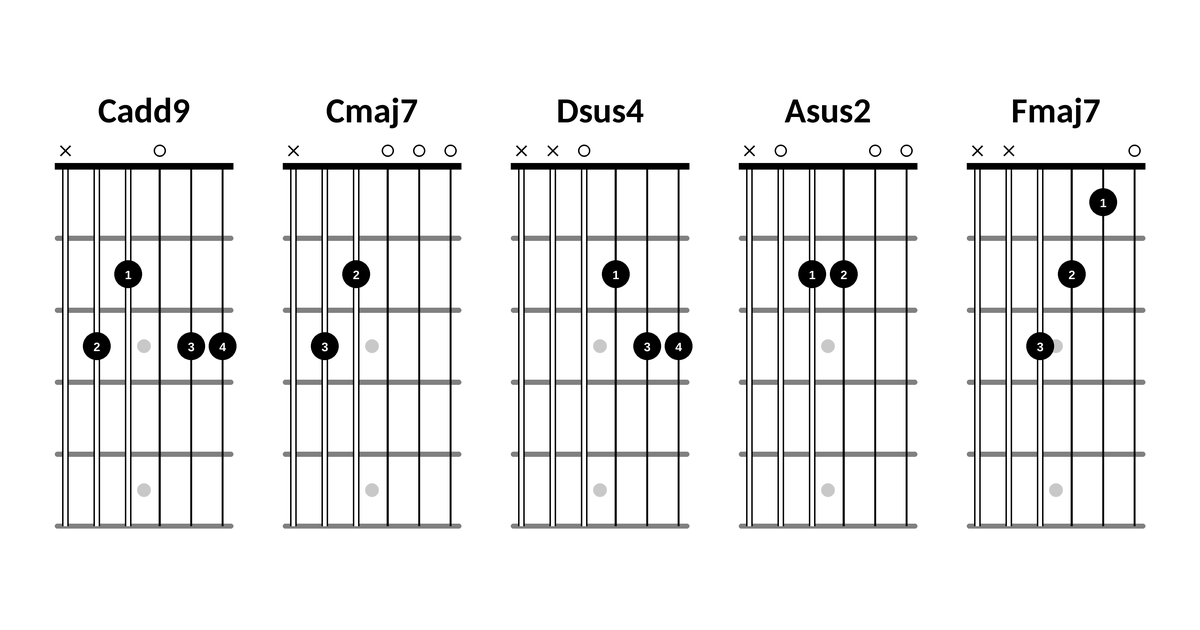
These five chords use open strings and shapes you probably know already. Each one has its own guide, with the fingering, practice moves and common mistakes.
Cadd9: The Easy Upgrade for C
Cadd9 makes a plain C sound full and modern. Its most common shape also shares two fingers with a popular G chord, so the change between them is almost effortless. Read our guide to the Cadd9 chord.
Cmaj7: One Finger Lifted
Start with an open C, lift one finger, and you have Cmaj7. It’s the quickest way to hear what a major 7 chord does. Read our guide to the Cmaj7 chord.
Dsus4 and Dsus2: Movement on D
These two chords turn a static D into a moving part, with one finger added or lifted. They’re the best place to hear sus chords in action. Read our guide to the Dsus4 chord.
Asus2 and Asus4: Shimmer on A
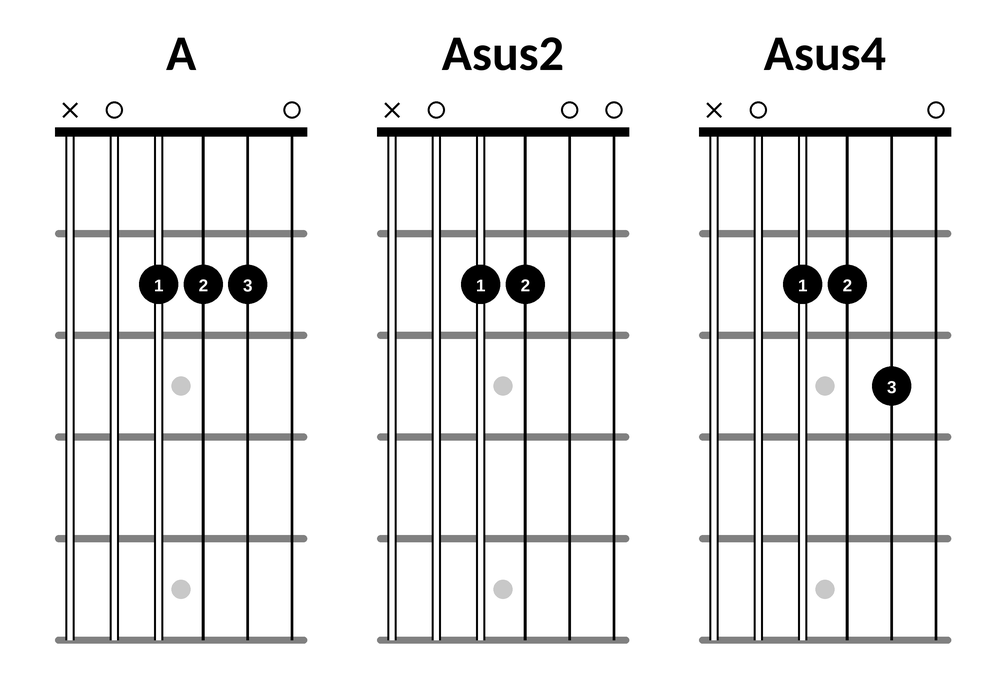
Asus2 is one of the easiest chords on the guitar, because it uses one fewer finger than A. Asus4 adds tension that resolves back to A. Read our guide to the Asus2 chord.
Fmaj7: The Friendly F
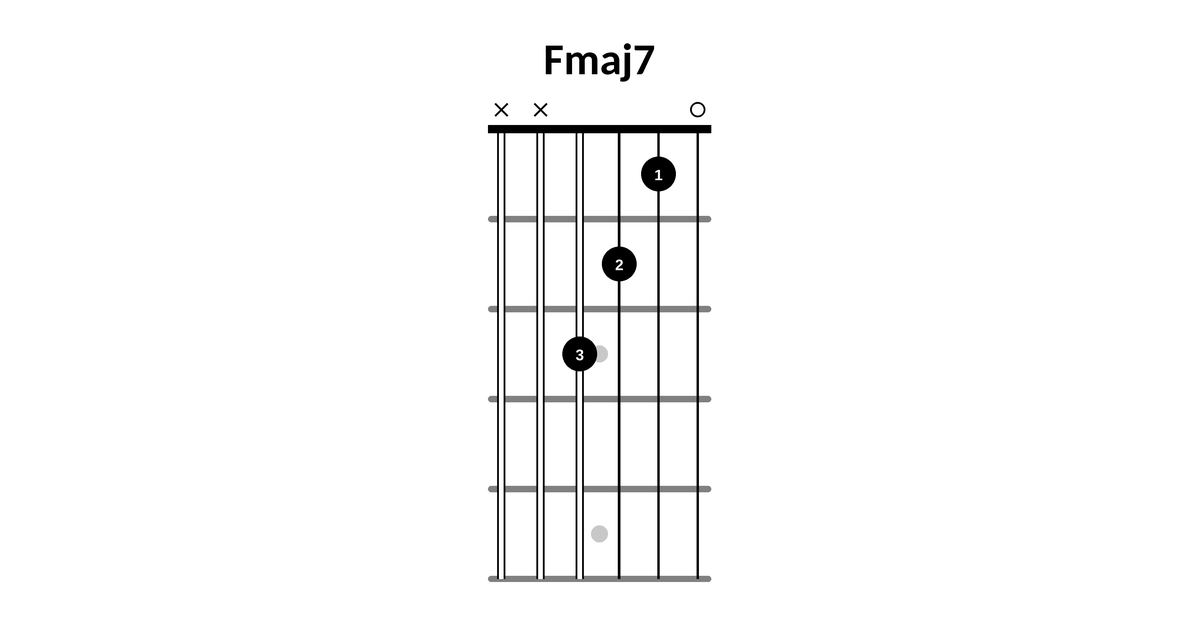
The full F chord stops many beginners cold. Fmaj7 uses three fingers and an open string, and it can stand in for F in many songs. Read our guide to the Fmaj7 guitar chord.
How to Use Sus Chords and Other Color Chords Without Overdoing It
Color chords work best as seasoning. If every chord is a sus or a maj7, the song can lose its shape. These simple habits keep things musical.
- Swap one chord at a time. For example, replace a single C with Cadd9 and listen before you change anything else.
- Decorate, then resolve. Sus chords sound best when they move back to the plain chord, like D to Dsus4 and back to D.
- Listen to the melody. If the singer holds the third of the chord, a sus chord can clash with it. In that case, keep the plain chord.
- Keep the bass note. Most color chords sound best when the lowest note is still the root. So mute or skip any low string that isn’t part of the shape.
- Try a capo. A capo lets you keep these open shapes in a higher key, so the open strings still ring.
Common Questions About Color Chords
Are Sus Chords Major or Minor?
Neither. Sus chords have no third, and the third is what makes a chord major or minor. That’s why they work in both happy and sad songs. It’s also why they can sound slightly unfinished until they move.
Can I Use Color Chords in Any Key?
Yes. The open shapes in this series sound best in keys that suit open strings, such as G, C, D and A. For other keys, a capo moves the same shapes up the neck. Later, movable versions of these chords let you play them anywhere without one.
Which Color Chord Should I Learn First?
Start with Asus2 or Cmaj7. Both use fewer fingers than the plain chord they replace, so you’ll hear results in minutes. After that, Cadd9 is the most useful in everyday strumming songs.
Keep Learning
Every chord in this series fits on our complete guitar chord chart, which is a handy reference for the plain shapes these chords grow from. To understand why they sound the way they do, read our guide to chord construction, from triads to 7ths. Cadd9, Dsus4 and Asus2 also appear on our free 15 Singer-Songwriter Guitar Chords chart and in our 80 Guitar Chords You MUST Know course.
Then pick one chord and start today. Cadd9 or Asus2 is a good first choice, because both are easy to finger and sound great right away.
View the “Ultimate Guitar Chord Chart” on TrueFire!Start →
Continue Learning
Explore the rest of this series:
- The Cadd9 Chord: The Easiest Way to Sound Instantly Better
- The Cmaj7 Chord: A Warm, Dreamy Sound Made Easy
- The Dsus4 Chord (and Dsus2): Two Chords That Make D Interesting
- The Asus2 Chord (and Asus4): Add Motion to Your A Chords
- The Fmaj7 Guitar Chord: The Easy Way Around the Dreaded F
About the Education Team
Four music-industry veterans with decades of combined experience in music education, curation, and production at TrueFire and ArtistWorks. The TrueFire Studios Education Team plans and edits this content and works with our master-musician faculty to keep it accurate and genuinely useful.