


The Cmaj7 chord has a warm, floating sound that turns an ordinary C into something dreamy. It’s also one of the easiest chords on the guitar. In fact, if you can play an open C chord, you’re one lifted finger away from playing Cmaj7.
What Is a Cmaj7 Chord?
A plain C major chord is built from C, E and G. A Cmaj7 chord adds one more note: B. That B is the seventh note of the C major scale, so the chord is called a major 7.
The B sits just a half step below C. That closeness gives the chord a gentle ache, a soft tension that never feels urgent. As a result, Cmaj7 sounds relaxed and complete. Many songs sit on it for bars at a time.
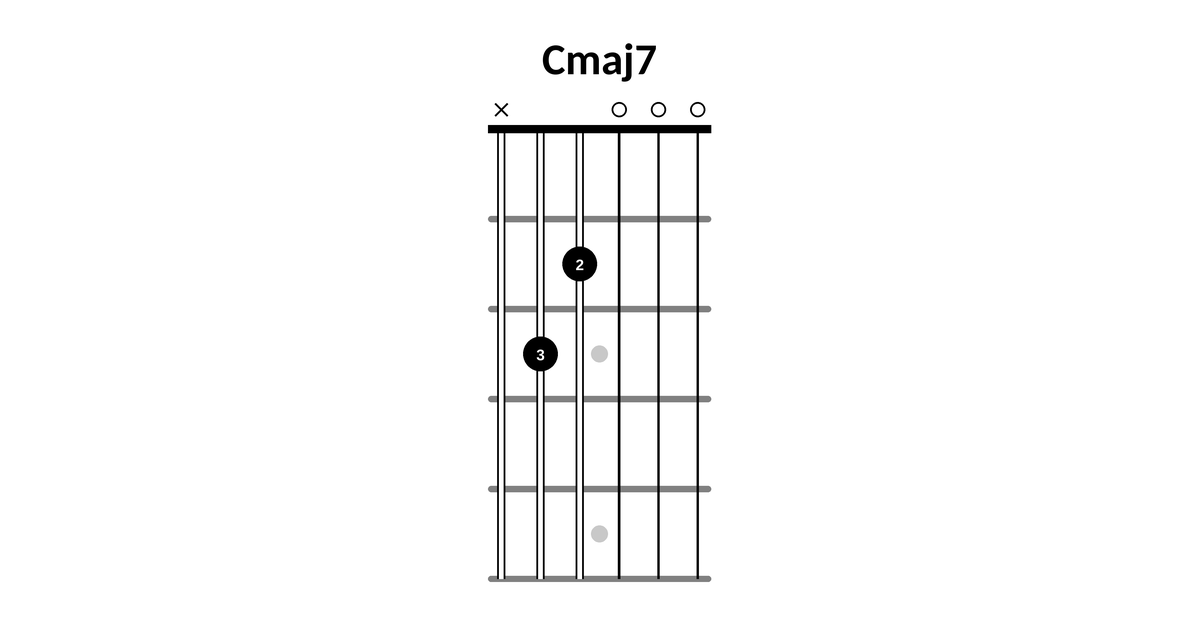
Cmaj7 vs. C7: One Note, Two Moods
The names look alike, but the sounds are very different. C7, also called a dominant 7, uses B-flat instead of B. That lower note makes C7 sound bluesy and restless, and it pushes toward the next chord.
Cmaj7, on the other hand, is calm and settled. So when a chart says “Cmaj7” or “Cmaj7th,” play the major 7 shape below. When it just says “C7,” use the dominant shape instead.
Why the Cmaj7 Chord Sounds Dreamy
Most plain chords sound solid and simple. A major 7 chord adds one note that rubs gently against the root, which softens the whole sound. Players often describe it as warm, wistful or late-night.
That’s why the Cmaj7 chord shows up so often in ballads, jazz standards, soul, bossa nova and soft rock. It’s a quick way to make a progression sound more grown-up without making it harder to play.
How to Play the Cmaj7 Chord
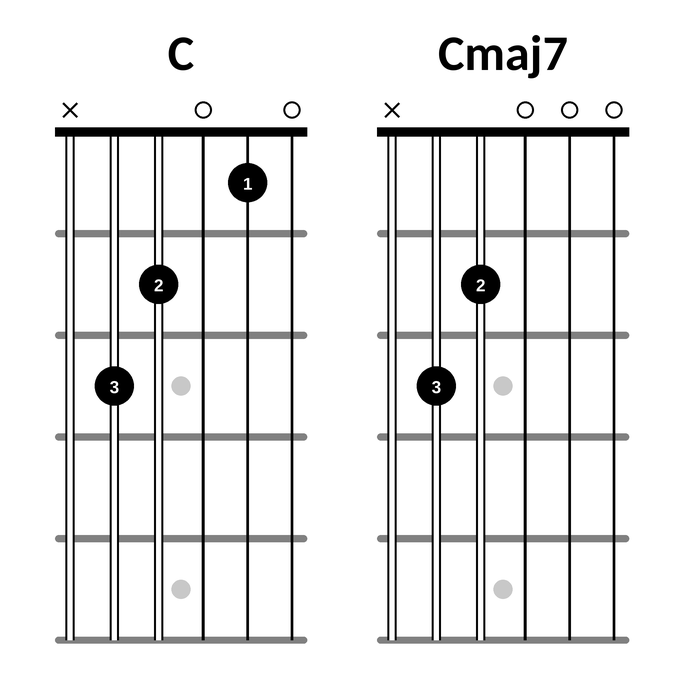
The open Cmaj7 shape starts from the open C chord. Its shape code is x32000. The strings below are listed from the thickest (low E) to the thinnest (high E).
- Low E string: don’t play it.
- A string: 3rd fret, ring finger.
- D string: 2nd fret, middle finger.
- G string: open.
- B string: open.
- High E string: open.
Compare that with an open C (x32010). The only difference is your index finger. In a C chord it presses the 1st fret of the B string, but for Cmaj7 you lift it off. The open B string supplies the B note that makes the chord a major 7.
Keep the Open Strings Ringing
Three open strings carry most of this chord’s sound, so they need to ring clearly. Arch your ring and middle fingers so they come down on their tips. Otherwise, the underside of a finger can touch the string below and mute it.
Then pick each string one at a time, from the A string down. If a string sounds dead, adjust that finger before you strum again.
A Movable Version for Later
Once you’re comfortable, there’s also a movable major 7 shape rooted on the A string. Because it uses no open strings, you can slide it up the neck to play a major 7 chord in any key. It’s a great next step after the open shape, and our TrueFire chord lessons cover it in detail.
Where the Cmaj7 Chord Fits
The Cmaj7 chord works anywhere a plain C would work, but it changes the mood. Try these three ways to use it.
- As a softer C. In a slow song, swap Cmaj7 in for C and listen to how the chorus relaxes.
- As a dreamy vamp. Alternate Cmaj7 and Fmaj7 for a whole verse. This two-chord sway is a classic sound in soul and dream pop.
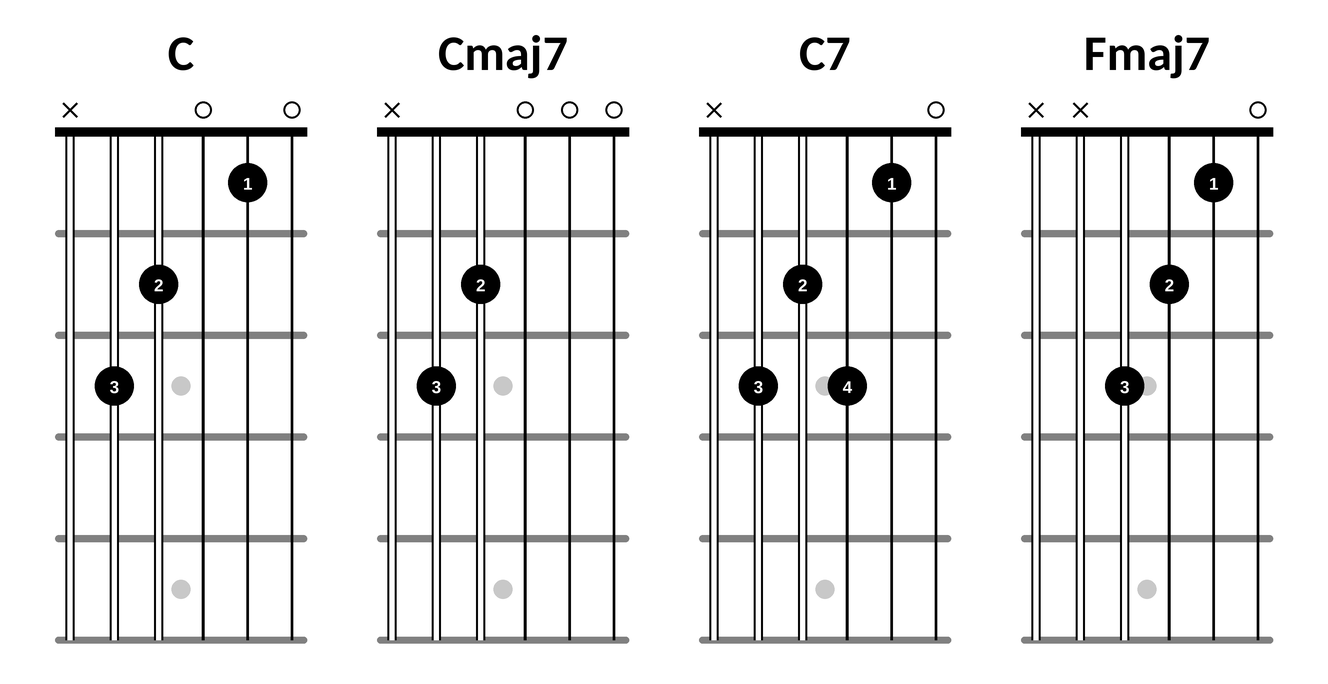
- As a step in a moving line. Play C, then Cmaj7, then C7, then Fmaj7. One note inside the chord falls by a half step each time, from C to B to B-flat to A.
Moving From Cmaj7 to Fmaj7
Fmaj7 (xx3210) is the perfect partner. Move your ring finger from the A string to the 3rd fret of the D string. Then move your middle finger from the D string to the 2nd fret of the G string. Finally, add your index finger to the 1st fret of the B string.
Each finger moves over by one string, so the change is quick once your hand learns it. Our guide to the Fmaj7 guitar chord covers that shape in full.
A Simple Practice Plan
- Play C, then lift your index finger to make Cmaj7. Repeat until it feels automatic.
- Next, strum Cmaj7 and Fmaj7 for four beats each, for two minutes.
- Finally, play the moving line: C, Cmaj7, C7 and Fmaj7, two beats each.
Common Cmaj7 Chord Mistakes
Most problems with this chord come from the open strings.
- Forgetting to lift the index finger. If it stays on the B string, you’re playing a plain C.
- Muting the G or B string. Arch your ring and middle fingers so the open strings ring through.
- Strumming the low E string. It adds an E in the bass, which weakens the C sound. Start your strum on the A string.
- Mixing it up with C7. C7 adds your pinky (or ring finger) on the 3rd fret of the G string. For Cmaj7, leave the G string open.
Keep Going With Color Chords
Next, try the Cadd9 chord, another easy upgrade for C that sounds bright rather than dreamy. If you’d like to understand why these chords sound the way they do, read Understanding Chord Construction.
You can also revisit the basics with our guide on how to play the C chord on guitar. And for the full family of color chords, read our pillar guide to sus chords, add9s and maj7s. Keep the complete guitar chord chart nearby as a reference.
View the “Ultimate Guitar Chord Chart” on TrueFire!Start →
Continue Learning
Explore the rest of this series:
- Sus Chords, Add9s and Maj7s: Guitar Chords That Make You Sound Pro
- The Cadd9 Chord: The Easiest Way to Sound Instantly Better
- The Dsus4 Chord (and Dsus2): Two Chords That Make D Interesting
- The Asus2 Chord (and Asus4): Add Motion to Your A Chords
- The Fmaj7 Guitar Chord: The Easy Way Around the Dreaded F
About the Education Team
Four music-industry veterans with decades of combined experience in music education, curation, and production at TrueFire and ArtistWorks. The TrueFire Studios Education Team plans and edits this content and works with our master-musician faculty to keep it accurate and genuinely useful.