


CB
Pinch harmonics are responsible for one of the most recognizable sounds in rock guitar. Most players who want them assume they need a specific pedal or amp setting to get there. They don’t. The technique is entirely in your picking hand. Once you understand the mechanics, you’ll start hearing opportunities for it everywhere. This article breaks down what’s actually happening when you squeeze that squeal out of the string. It covers what goes wrong when it doesn’t speak, and how to practice the motion until it feels like a single reflex. For broader context on the whole family of picked harmonic techniques, start with the complete guide to picked harmonics on guitar.
What Pinch Harmonics Actually Are
The squeal you hear on recordings is not reverb, not a whammy pedal, and not always distortion. Pinch harmonics happen when the side of your picking-hand thumb contacts the string immediately after the pick strikes it. That contact cuts off the fundamental vibration. It forces the string to speak one of its upper overtones instead. The result is that piercing, vocal cry that defines so many iconic rock and blues moments. Chris Buono covers the exact mechanics of this motion in his TrueFire course. His framing is precise: the thumb grazes the string at the point the pick exits, not before, not a half-beat later.
It’s worth separating this from other harmonic techniques. Natural harmonics use a light left-hand touch at specific nodes along an open string. Artificial harmonics place the picking-hand index finger over a fretted note to produce a node twelve positions up. Pinch harmonics, by contrast, are self-contained in the picking motion itself. That single-hand quality is what makes them so expressive and so transferable across styles.

This video is unavailable.
Learn 59 more electric guitar techniques with Chris Buono!Start →
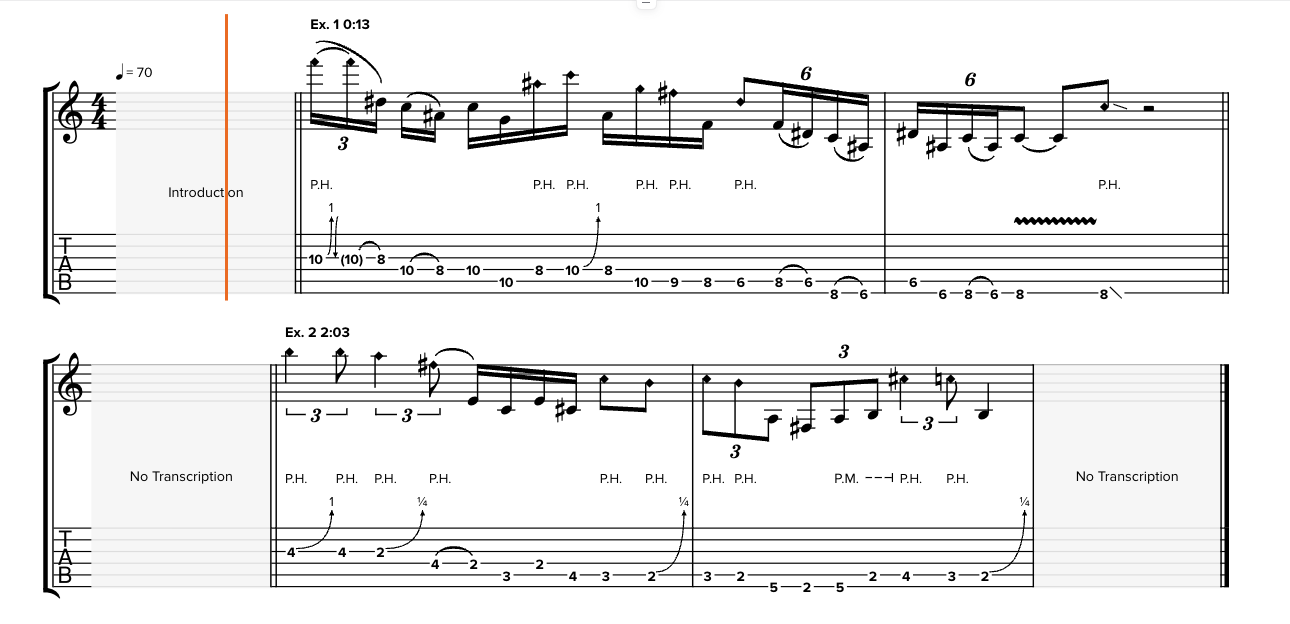
The Timing Problem Most Players Miss
Here’s where most beginners get stuck. The thumb and pick have to act as a single coordinated gesture, not as two separate events. If the thumb touches the string too early, it mutes the note entirely. If it arrives too late, the fundamental has already locked in and the harmonic never speaks.
Think of it less as “pick, then graze” and more as one motion with two contact points. They happen in rapid sequence. The pick exits the string, and the thumb edge is right there at that exact moment. Hesitation between the two is the most common reason the harmonic dies. Because overthinking is so easy to do, the most productive early practice is slowing the whole gesture down. Keep going until both contacts blur into one.
The other timing variable is where along the string you pick. Different positions between the neck and bridge produce different overtones when pinched. This isn’t a bug. Moving your picking hand closer to the bridge tends to bring out higher, sharper overtones. Moving it toward the neck shifts the overtone profile lower and slightly more rounded. Experimenting with position is not a sign that something is wrong. In fact, it is the technique. Players who find one sweet spot and stop there are leaving a lot of expressive range on the table.
Grip, Pick Exposure, and Why Small Adjustments Matter
Your grip affects everything here. Specifically, how much pick you expose between your thumb and index finger determines where the thumb naturally falls after the pick exits the string. Too much pick showing means the thumb never gets close enough to graze the string at all. Too little pick means you’re fighting the string with the side of your thumb before the note even sounds.
Most players find that holding the pick so only a small edge protrudes makes the motion feel more automatic. The thumb is already positioned close to the string. It has less distance to travel. As a result, the harmonic speaks with less conscious effort. Start with a relatively tight grip and adjust from there based on what your hand tells you.
Pick angle matters too. The pick hits the string at an angle, so the exit point shifts slightly. That shift also affects where the thumb lands. Some players find a more perpendicular attack makes pinch harmonics easier to trigger consistently. Others prefer a slight angle. Neither is wrong. You should be aware, however, that grip and angle work together. Changing one without the other can send you chasing your tail.
How to Practice the Motion Without Overthinking It
The best early drill is simple. Pick one open string and spend a few minutes moving your picking position back and forth while pinching on every stroke. You’re not fretting anything. You’re just training your hand to feel the thumb-pick relationship. You’re also discovering where the harmonic nodes live. Different spots will pop with different overtones. Some will speak easily. Others will be quieter. This builds the physical memory you need before adding any fretting-hand complexity.
Once the motion feels reliable on an open string, move it to a fretted note. Practice triggering pinch harmonics on demand. Then take the technique into a simple blues or rock phrase. The goal at this stage is not to pinch every note. Instead, apply it selectively to the notes that carry the most expressive weight. A well-placed pinch harmonic on a bent note lands far harder than a string of them back to back. For a technique with similar precision demands on articulation timing, check out how tapped harmonics work.
Where Pinch Harmonics Live Stylistically
Pinch harmonics belong to rock and blues, but their reach is wider than players expect. In hard rock and metal, they’re used for aggressive accents on heavy riffs. In blues, a pinched note on a bend gives a phrase a vocal, almost crying quality. In country, especially the chicken-pickin’ tradition, a quick pinch on a string pop produces a sharp, biting attack that’s completely its own sound.
The stylistic range comes from the same variable you already explored in practice: pick position and the resulting overtone. A pinch closer to the bridge in a high-gain context produces a full-on scream. The same technique on a clean amp with the pick closer to the neck gives a glassy, unexpected chime. Understanding that range separates players who use pinch harmonics as a single trick from those who use them as a genuine expressive tool.
Making the Squeal Yours
The pinch harmonic is pure attitude compressed into one right-hand gesture. Once the motion becomes reflexive, it stops being a technique you perform and starts being a sound you reach for. The biggest shift happens when you stop thinking about thumb and pick separately. Start feeling them as one motion with one outcome.
For full context on where pinch harmonics fit among all picked harmonic approaches, return to the complete guide to picked harmonics. And if you want to explore the softer, cascading side of harmonic technique, harp harmonics offer a very different feel worth adding to your vocabulary.
Dig deep with Chris Buono in his massive TrueFire library!Start →
About the Education Team
Four music-industry veterans with decades of combined experience in music education, curation, and production at TrueFire and ArtistWorks. The TrueFire Studios Education Team plans and edits this content and works with our master-musician faculty to keep it accurate and genuinely useful.
Featured Contributor
CB
Chris Buono is a prolific guitar player and educator. Chris has made an impact on guitarists all over the world through his time at Berklee College of Music as a professor and 50 course titles including the celebrated Guitar Gym series.